

Stress is now a part of everyday life — whether it’s looking for a new job, handling tough meetings, deadlines or facing unexpected changes. All our reactions to stressful experiences often lead us to two options: fight or flight. But is there another way of coping with stress?
My Journey to a Stress-Free Life
I’ve dreamed of a life free from stress ever since I realized how much it impacts our health. Recently, a friend of mine was diagnosed with cancer, and the underlying cause was stress. This paralyzed me, and I knew I had to start prioritizing my well-being. So, I moved to a small, peaceful town, surrounded by nature, with friendly neighbors and the freedom of remote work. It felt like a perfect start for calm and mindfulness — what more could I ask for?
Well, it didn’t last long. After a few months, I faced an enormously stressful situation — losing my job. My project ended, and there were no new openings. On top of that, the job market was challenging at that time, so interviews, screenings, and video calls became an emotional rollercoaster. I knew how much I wanted a job and how hard it would be to find one. I reached a point where I couldn’t even bear to answer the phone. The situation turned into my worst nightmare, and I couldn’t sleep because of it.
The more I tried to avoid stress during the day by finding distractions, the harder it hit at night. I started suffering from insomnia. My body couldn’t find a way to release the pent-up energy. My mind and body were exhausted, and I felt trapped.
The main issue was that I mentally blocked myself from coping with the situation. Negativity took over my thoughts and I couldn’t find a way out. Happily, this situation ended, and I’ve never felt more relieved. However, my experience forced me to reflect on that after some time. I read Kelly McGonigal’s book The Upside of Stress, which I found in the library corner at our office in Gdynia — I highly recommend visiting it if you ever get the chance. Below are a few facts that opened up my mind regarding the attitude which, in my opinion, are worth sharing.
The Power of Stress
Stress doesn’t just overwhelm us; it also fuels our energy in powerful ways. As McGonigal explains, stress energizes the body and enhances brain activity. Adrenaline sharpens your senses — your pupils dilate, your hearing becomes more acute, and your brain processes information faster. This heightened focus can help you navigate challenges effectively.
If survival is at stake, physiological changes intensify further, activating a fight-or-flight response. But there’s more to stress than just panic.
Stress can be both good and bad. For instance, you might panic when you hear rumors about your project being canceled, immediately imagining the obstacles you’ll face. Or you can try to stay calm, keep breathing(!), wait for official confirmation, and then start planning what to do next. Easy peasy, right?
How Stress Shapes Us
How you respond to stress depends mainly on your experiences. Every stressful event you encounter leaves a memory imprint, teaching your brain and body how to handle similar situations in the future. Extreme experiences often leave the strongest impressions, emotionally shaping you and influencing your attitude toward challenges.
The goal is to let stress awaken your inner strengths — courage, the desire for connection, and the willingness to grow. When stress arises, focus on what it can teach you and how it can help you become stronger. Use the energy that the body has already created.
Turning Stress into Strength
To transform stress into a positive force, consider these steps:
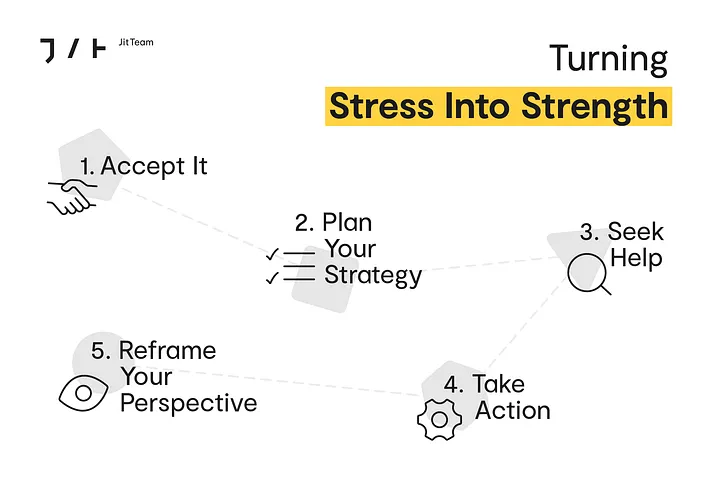
1. Accept It
Imagine you’ve just been assigned a high-stakes project at work with a tight deadline. Instead of denying how overwhelmed you feel, acknowledge your stress:
“This project is challenging, and I feel nervous about whether I can deliver it on time. That’s okay — it’s a natural reaction to the situation.”
Acknowledging the stress allows you to start thinking about how to manage it, rather than letting it paralyze you.
2. Plan Your Strategy
Let’s say your stress stems from preparing for an upcoming exam. Break it down:
“The main source of stress is feeling unprepared. My strategy is to review one topic each evening, allocate extra time for weaker areas, and take practice tests over the weekend.”
By creating a step-by-step plan, you transform a daunting situation into manageable tasks, reducing the feeling of being overwhelmed.
3. Seek Help
Imagine you’re struggling with a financial problem, such as a sudden, unexpected expense. Share your concerns with a friend, family member, or financial advisor:
“I’m feeling really stressed about this bill. Could you help me figure out how to budget for it or suggest some resources I could use?”
Discussing your challenges with someone you trust can not only offer solutions but also make you feel supported. Collaborating on a solution builds confidence and strengthens relationships.
4. Take Action
Consider a scenario where you’ve been putting off preparing for a big presentation. Instead of stressing about the looming deadline, take immediate steps:
“I can’t control the deadline, but I can write an outline today and design my slides tomorrow. Starting now will reduce the last-minute rush.”
Taking even small actions within your control creates momentum, which helps alleviate feelings of helplessness.
5. Reframe Your Perspective
You’ve received constructive criticism at work, and it initially feels stressful because it highlights areas for improvement. Instead of fixating on what went wrong, reframe it:
“This feedback is tough to hear, but it’s a chance to learn and grow. If I address these points, I’ll be stronger in my role and better prepared for future challenges.”
By viewing stress as an opportunity for self-improvement, you turn it into a motivational force.
Conclusion
I fully understand that implementing these steps is part of a larger process, it won’t happen overnight and will take practice and experience. But as life continues to challenge us, learning to redirect stress from a negative force into a positive one can help us grow — or simply survive. The key to changing how you react to stress is practice. So good luck to me and you. 🙂